
Backup Power When the Grid Goes Down
Generator Repair & Installation in Crossett for residential and commercial properties needing reliable standby power during outages
Standby generators fail when they're needed most—during extended outages caused by storms, equipment failures, or grid maintenance—leaving properties without power for heating, cooling, refrigeration, or critical equipment operation. A generator that doesn't start, runs briefly and shuts down, or fails to transfer load properly provides no protection during an outage. CSC of Crossett installs and repairs standby generators for residential and commercial properties in Crossett, diagnosing starting failures, fuel delivery issues, and transfer switch malfunctions that prevent automatic backup power when utility service is lost.
Generator troubleshooting involves testing the battery that cranks the engine, verifying fuel pressure and flow from the gas line or propane tank, inspecting the automatic transfer switch for proper voltage sensing, and checking control boards that manage startup sequences. Many generator failures trace back to batteries that lose charge during long idle periods, fuel systems with air or moisture contamination, or transfer switches that don't recognize a utility outage. Repairs restore the generator's ability to detect a power loss, start within seconds, and carry the connected load until grid power returns.
Request a generator diagnostic to identify why your system isn't providing dependable backup power.
How Generator Installation Provides Reliable Standby Power
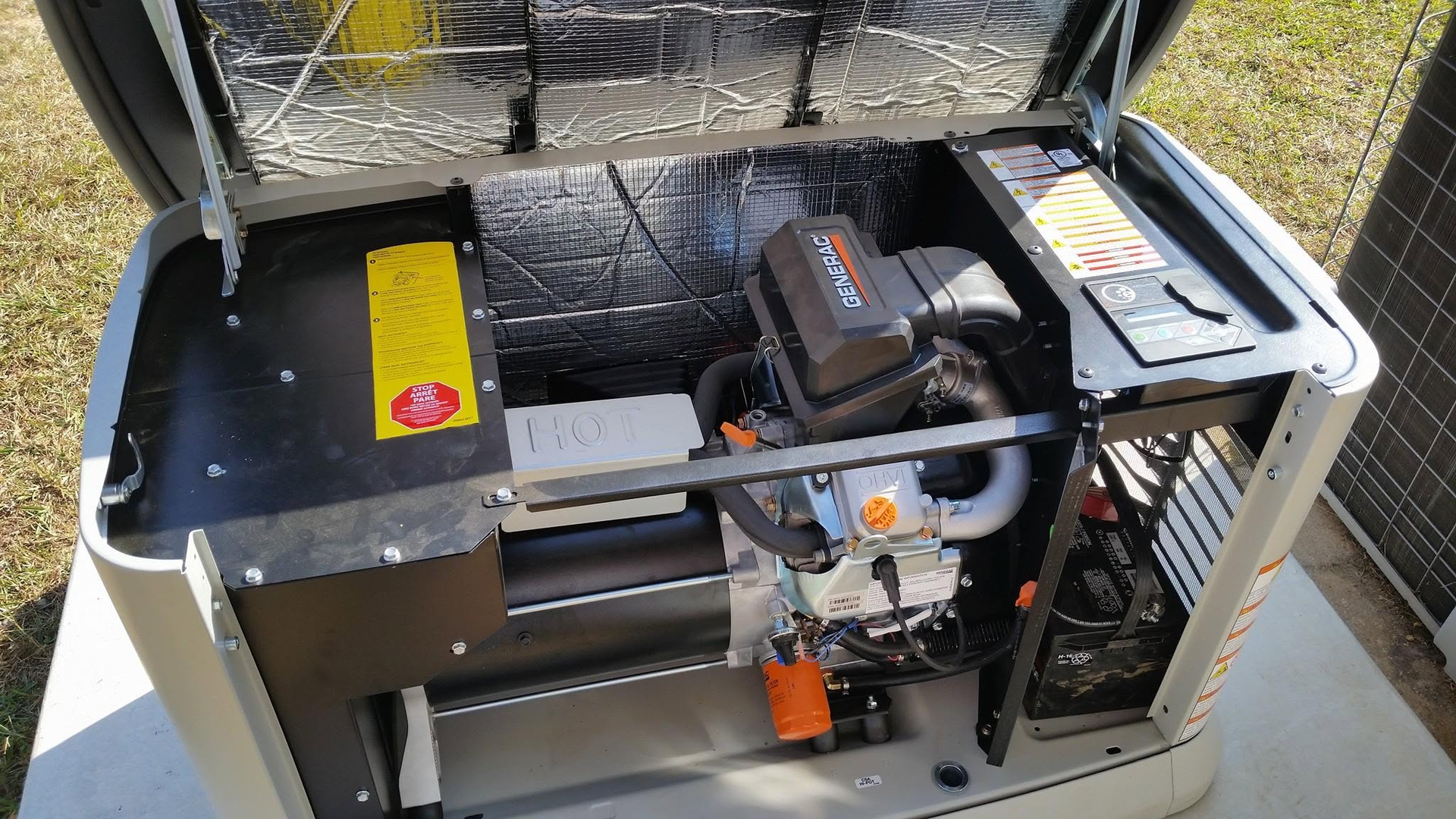
Installing a standby generator begins with calculating the total electrical load that must remain powered during an outage—whether that's the entire property or selected circuits for essentials like HVAC, refrigeration, lighting, and well pumps. The generator must be sized to handle the startup surge when motors and compressors first energize, not just their running wattage. Proper installation includes positioning the unit on a level pad with clearance for ventilation and service access, connecting fuel supply lines with shutoff valves and regulators, and wiring the automatic transfer switch to isolate the generator from the utility grid.
Once installed and tested, the generator monitors utility voltage continuously and starts automatically within ten to fifteen seconds of detecting an outage, transferring the load seamlessly without requiring manual intervention. You'll notice that lights, HVAC systems, and appliances continue operating as though grid power never failed. The system runs weekly self-tests to verify battery charge, oil pressure, and coolant temperature, alerting you to maintenance needs before they cause a failure during an actual outage.
Selecting the right generator solution depends on the property's electrical service size, the number of circuits requiring backup, and whether propane or natural gas is available as a fuel source. Some installations require upgrading the main electrical panel or adding subpanels to separate critical and non-critical circuits. Guidance during the planning phase prevents undersized systems that can't handle the load or oversized units that waste fuel and increase installation costs unnecessarily.
Property owners considering generator installation or addressing reliability concerns often ask about system selection and maintenance requirements.
What causes a generator to start but not transfer power?
The automatic transfer switch may have failed contactors, incorrect voltage sensing calibration, or control board faults that prevent it from disconnecting utility power and connecting the generator to the load.
How often do standby generators need maintenance?
Most manufacturers recommend annual service that includes oil and filter changes, battery testing, spark plug inspection, and exercise cycles under load to verify full system operation before outage season.
What size generator do I need for my property?
Sizing requires adding up the running wattage of all essential circuits plus the highest motor surge, typically resulting in systems ranging from eight kilowatts for basic residential needs to over twenty kilowatts for whole-home or commercial applications.
How does weather in Crossett affect generator reliability?
High humidity accelerates battery corrosion and promotes condensation in fuel systems during long idle periods, making regular exercise cycles and fuel stabilization more important for generators that run infrequently.
When should a generator be replaced instead of repaired?
Generators with cracked engine blocks, failed alternators, or control systems that are no longer supported by the manufacturer often cost more to repair than installing a newer, more efficient unit with modern monitoring features.
Common Generator Service Questions
CSC of Crossett provides generator installation and repair services that deliver dependable standby power when outages occur. Schedule service for an existing generator or request an installation estimate to select the
right backup power solution for your property in Crossett.